
In business since 1985. Online since 1994. We sincerely thank you for supporting family owned, family operated businesses!
Give us a call from 8am to 6pm Mon-Fri. We are available to answer questions or to take your order.
(361) 645-3325
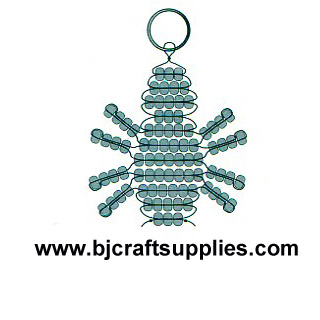
If you make this project please share your photos with us. With your permission we'll add it to the page and credit it to you.
Early beads were made from natural materials such as shell, bone, stone, wood and glass. With the development of synthetic plastics in the late 1800s and early 1900s, manufacturers gained a material that could be molded into beads in an enormous variety of shapes and colors. Later plastics, including acrylic, made colorful beads inexpensive, lightweight and easy to mass produceāhelping turn them into the familiar craft-room staple we know today.
1. Find the half way point of the ribbon/cord and double knot it onto the keyring.
2. Begin weaving the beads onto the ribbon/cord following the pattern.
3. After finishing the pattern tie a double knot in the ribbons/cords at the bottom and apply tacky glue to secure.
4. Three or four beads can be strung onto the end of each ribbon/cord as a finishing touch (optional)
(Seed beads or E beads can be used in place of pony beads to create smaller characters.)